When Should You Turn Your Furnace On in Amherst, NY?

The short answer: turn the furnace on when indoor comfort drops, usually when outdoor highs stay in the 50s or overnight lows fall into the 40s.
In Amherst, that can happen earlier than expected. A sunny 68°F afternoon can turn into a damp 43°F morning fast, especially across Williamsville, Tonawanda, and the Northtowns. Fall weather in Western New York can change quickly. It changes by the week, and sometimes by the hour.
Here’s how to decide when to turn your furnace on, what to check first, and when a rough startup means it’s time to call for help.

Most Amherst homes need heat when nights drop into the 40s
There’s no single date when every home should turn on the furnace. The better guide is temperature.
Most people start using heat when:
Outdoor overnight lows fall into the 40s
Daytime highs stay in the 50s
Indoor temperatures drop below about 65°F to 68°F
The house feels damp or chilly even after windows are closed
Someone in the home needs warmer indoor air for comfort
The U.S. Department of Energy commonly recommends setting the thermostat around 68°F while awake during the heating season. That doesn’t mean every house needs the same setting. Older homes, drafty windows, room layout, and insulation all change how warm a home feels.
A brick home near Main Street in Williamsville may hold heat differently than a newer home in East Amherst. A two-story house in Tonawanda may have warm upstairs rooms and a chilly first floor. A ranch with a finished basement may feel cold before the thermostat shows it.
A good rule for Amherst and the Northtowns is this:
If the indoor temperature drops below your comfort range for more than a few hours, it’s fine to turn the furnace on. You don’t need to wait for winter.
Running the furnace early for a short test is smart. It’s better to find a problem on a mild October afternoon than during the first cold snap.
Western New York fall weather can flip fast
Fall weather near Buffalo is hard on heating plans because the area sits near Lake Erie and close to Lake Ontario. Large bodies of water slow seasonal changes, but they also add moisture and help fuel quick shifts in weather.
That’s why Amherst can get a warm, breezy day followed by a cold rain the next morning. Wind direction matters too. A southwest wind can bring mild air. A north or northwest wind can make it feel much colder.
The first few furnace runs often happen during these conditions:
Cold rain after a warm stretch
Windy nights with lows in the 40s
Cloudy days when the sun doesn’t warm the house
Early frost in open areas outside the city
A quick front moving through Western New York
This is also why some homes in Amherst turn the heat on before homes closer to the lake, or the other way around. Small local changes make a difference.
If the furnace hasn’t run since spring, don’t wait until the coldest night to test it. Turn it on once before you truly need it. Let it run through a full cycle. Listen. Smell. Check the vents. Make sure the house warms up.
For a furnace Amherst NY homeowners count on all winter, that first fall startup tells you a lot.
Check these things before the first furnace startup
A few simple checks can prevent avoidable problems. None of these steps should involve opening gas lines, wiring, or sealed furnace parts. Leave that work to a trained HVAC professional.
Replace or inspect the air filter
A clogged filter can reduce airflow. That makes the furnace work harder and can cause poor heating, short run times, or overheating.
Check the filter before the first startup. If it looks gray, dusty, or packed with debris, replace it. Make sure the new filter points in the correct airflow direction. Most filters have an arrow on the frame.
Homes with pets, remodeling dust, or heavy summer air conditioning use may need filter changes more often.
Make sure vents and returns are open
Walk through the house and check supply vents and return grilles.
Look for:
Rugs covering floor vents
Furniture blocking return air
Closed registers in unused rooms
Dust buildup on grilles
A furnace needs steady airflow. Closing too many vents doesn’t save much energy, and it can cause comfort problems.
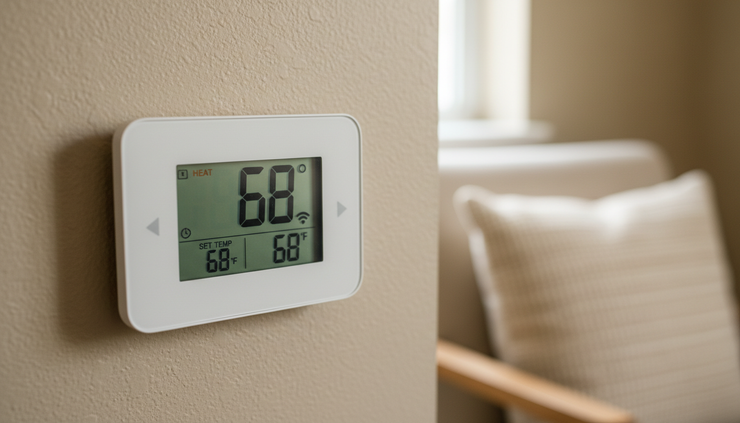
Set the thermostat to heat
This sounds basic, but it’s common. Make sure the thermostat is set to Heat, not Cool or Off. Raise the temperature a few degrees above the current room temperature.
If the thermostat uses batteries, replace them if the screen is dim or blank.
Smart thermostats can also cause confusion after a season change. Check the schedule. Some models may still follow cooling season settings.
Clear the area around the furnace
The furnace area should be clean and open. Move boxes, paint cans, laundry, and storage items away from the unit.
Keep the area around the furnace clear so a technician can access it if service is needed. Also check that nothing blocks intake or exhaust pipes if the system vents through the side of the house.
After windy fall days, leaves and debris can collect near outdoor vent pipes. Keep those openings clear.
Check the breaker and furnace switch
Many furnaces have a switch nearby that looks like a light switch. Make sure it’s on. Also check the electrical panel for a tripped breaker.
If a breaker trips again after resetting it, stop. Don’t keep resetting it. That points to an electrical issue that needs service.
Test the system before the first cold night
Pick a mild day and run the furnace for 15 to 20 minutes. Warm air should come from the vents after a short delay.
The furnace may not blast hot air right away. Many systems start with an ignition sequence and fan delay. That’s normal. What matters is whether it starts, runs steadily, and warms the home.
This kind of early check is a key part of furnace maintenance Amherst NY homeowners can handle before scheduling professional service.

Some smells and noises are normal at first
The first furnace run of the season can smell strange. It can sound different too. Not every odor or noise means something is wrong.
A dusty burning smell can be normal
A light dusty smell during the first run is common. Dust settles on heat exchangers, burners, and nearby surfaces while the furnace sits unused. When the system heats up, that dust burns off.
This smell should fade within an hour or so. Open a window briefly if needed.
Call for service if the smell is strong, doesn’t fade, or returns every time the furnace runs.
A brief clicking sound can be normal
Many furnaces click when starting. That may be the ignition system or controls beginning the heating cycle.
A short click before the burners light is usually normal. Repeated clicking without heat is not.
A soft whoosh at startup can be normal
A smooth ignition may cause a soft whoosh. The burners light, then the blower starts after the heat exchanger warms.
A loud bang or delayed ignition is different. That needs attention.
Duct noises can happen as metal warms up
Popping or ticking sounds from ducts can happen when metal expands as warm air moves through. This is common in many homes.
Loud banging, scraping, grinding, or rattling from the furnace cabinet is not something to ignore.
Warning signs that point to a furnace problem
A furnace should start without drama. It should run a steady cycle and shut off when the thermostat reaches the set temperature.
Call an HVAC professional if you notice any of these warning signs.
The furnace won’t start
If the thermostat calls for heat and nothing happens, check the basics first.
Thermostat setting
Thermostat batteries
Furnace switch
Circuit breaker
Air filter
Closed gas valve, if visible and safe to check
Don’t take apart the furnace. Don’t try to relight anything unless the owner’s manual clearly explains the process for that specific model.
The furnace starts and shuts off quickly
Short cycles can come from airflow problems, overheating, a dirty flame sensor, thermostat issues, or a system fault.
Start with the filter. If a clean filter doesn’t fix it, schedule service. Short cycling can wear parts faster and leave rooms uncomfortable.
Cold air comes from the vents
Cold air at the start of a cycle can be normal for a minute. Cold air that continues is a problem.
Possible causes include ignition failure, gas supply issues, thermostat problems, or a system stuck in fan mode.
Check whether the thermostat fan setting is on Auto instead of On. If it’s on On, the blower may run even when the furnace isn’t heating.
The furnace makes loud or unusual noises
Pay attention to new sounds.
Call for service if you hear:
Grinding
Screeching
Repeated clicking
Booming at startup
Metal scraping
Heavy rattling
These sounds can point to blower motor issues, loose parts, ignition problems, or worn components.
You smell gas or rotten eggs
Leave the home and call the gas utility or emergency services from a safe location if you smell gas. Don’t turn switches on or off. Don’t use flames. Don’t try to find the leak yourself.
A gas smell is never a wait-and-see issue.
The carbon monoxide alarm goes off
Leave the home right away and call 911 or the proper emergency number. Carbon monoxide can’t be seen or smelled.
Every home with fuel-burning equipment should have working carbon monoxide alarms. Follow the alarm manufacturer’s placement and replacement guidance.
Schedule furnace repair if the system doesn’t start properly
If the furnace won’t start, won’t stay on, or blows cold air, don’t wait for a colder night. A small problem in early fall can become a no-heat call during the first hard freeze.
The Cool Factory Heating & Cooling can help with furnace repair Amherst NY homeowners need when the system doesn’t respond the way it should. That includes homes in Amherst, Williamsville, Tonawanda, and nearby Northtowns communities.
Schedule help if:
The furnace fails the first seasonal test
Heat is weak or uneven
The system cycles too often
The burners don’t light
The blower runs nonstop
The thermostat and furnace don’t respond to each other
You’re unsure whether a sound or smell is safe
A professional can inspect the ignition system, electrical components, blower, burners, safety controls, and airflow. They can also spot problems that aren’t obvious from the thermostat.
FAQ
What month do people in Amherst usually turn on the furnace?
Many homeowners start using heat sometime in the fall when nights drop into the 40s and indoor temperatures fall below a comfortable level. The exact timing changes from year to year because Western New York weather shifts quickly.
Is it bad to turn the furnace on early?
No. Running the furnace early for a short test is a good idea. It helps catch startup problems before cold weather arrives.
What thermostat temperature should I use in fall?
A common setting is around 68°F when people are home and awake. Adjust based on comfort, drafts, insulation, and household needs.
How long should a dusty smell last after turning on the furnace?
A light dusty smell may last for the first heating cycle. If it lasts more than an hour, smells electrical, smells like gas, or keeps coming back, call for service.
Should I get the furnace checked every year?
Annual service is a smart choice for most gas furnaces. It helps confirm safe operation, proper airflow, and reliable startup before steady winter use.

The practical answer for Amherst homeowners
Turn on the furnace when the house feels cold and outdoor lows start landing in the 40s. Don’t wait for the first freeze. Test the system early, change the filter, check vents, and pay attention to smells and sounds.
A little dust smell or brief clicking can be normal. No heat, repeated clicking, loud banging, gas odors, or short cycling are not normal.
If the first startup doesn’t go well, schedule service before colder weather moves in. You can schedule furnace repair with The Cool Factory Heating & Cooling and get the system checked before the next Northtowns cold snap.


Comments